
Hi, I'm Candace
Welcome to NewWay Accounting! Explore our resources for small businesses and entrepreneurs to help you maximize your profit and amplify your tax savings!
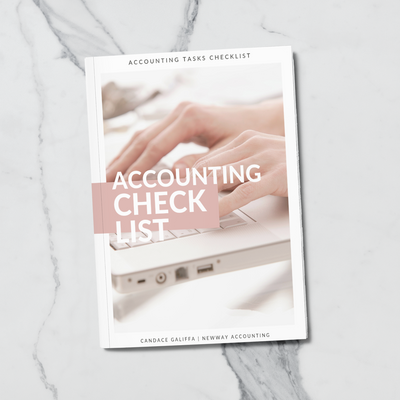
free download
GRAB YOUR COPY!
The Ultimate Accounting Checklist for Entrepreneurs
TOP PICKS
BUSINESS TIPS
TAX DEDUCTIONS
TAX REFORM
QUARTERLY TAXES
SAVINGS & RETIREMENT
March 26, 2026
In most small businesses, financial statements end up gathering digital dust. You might glance at revenue and net profit, close it, and move on with your day. Maybe you even feel a little guilty about it. We’re about to change that.
Those financial statements are trying to tell you something important. They’re actually an honest picture of your business’s health. Way more honest than your gut feeling, and way more useful than looking at your bank balance alone.
Your bank balance is lying to you
Raise your hand if you’ve ever thought, “I’ve got money in my business checking account, so I must be doing fine.” If your hand is up, you’re in excellent company.
But unfortunately, a healthy bank balance can coexist with a struggling business. Maybe you collected a big payment this month that won’t happen again. You might have bills due next week that haven’t hit yet. You might be profitable on paper, but hemorrhaging cash in ways that will catch you off guard.
That’s exactly why your financial statements exist. Together, they give you the full picture.
- Balance sheet. What do you own and owe? Your balance sheet is a snapshot of your financial position at a certain point in time.
- Profit and loss statement (P&L). Are you making money? Revenue – expenses = your bottom line.
Three questions to ask every month
You don’t need an accounting degree to get value from your financial statements. You just need to start asking three simple questions when you look at your financials. These three questions will unlock more insight than you might expect.
Am I more profitable than last month?
Compare your net income (that bottom line number on your P&L) month over month. Is it trending up, down, or flat? Don’t panic over one bad month, but do pay attention to a direction that’s heading the wrong way for several months in a row.
Are my biggest expenses growing faster than my revenue?
Scroll through your expense categories. If payroll, materials, or overhead is creeping up but your revenue isn’t keeping pace, that’s a conversation worth having before it becomes a crisis.
Why is my cash balance different from my profit?
This one trips up a lot of small business owners. You can be profitable and still cash-strapped. Common culprits include inventory you paid for but haven’t sold yet or principal payments on loans that don’t show up as expenses the way you’d expect.
If profit is up but cash feels tight, there’s usually a good explanation. You just have to look for it.
Try scheduling just 15 minutes each month, right after you receive your financial statements, to ask these three questions.
What story are your financial statements telling you?
Many small business owners think of their financial statements as a report card. I prefer to think of them as a story about what happened to your business last month, last quarter, or last year.
Like any good story, your financial statements have characters (revenue streams, expense categories), plot twists (that month when everything went sideways), and a narrative arc (are things getting better, worse, or staying the same?).
When you start reading them that way, looking for the story rather than scanning for a single number, they become a lot more interesting. You might notice that your biggest revenue month wasn’t actually your most profitable one because expenses spiked, too. Or you might notice one service became your highest-margin source of revenue over time. These are things your bank balance won’t tell you.
You don’t have to interpret your numbers alone
If you feel lost or overwhelmed when you open your financial statements—or don’t trust the numbers they’re giving you—that’s a signal to seek professional help.
Your accountant should be able to translate your financial statements into plain English. At NewWay Accounting, we loved answering questions like, “What does this number mean?” or “Is this trend normal for our industry?” It means you’re engaging with your numbers, you’re curious, and you want to use your financial statements to actually run a better business.
If you’re ready to make your numbers work for you, contact NewWay Accounting. You built your business, and you deserve to understand exactly how it’s doing financially. We’re here to help you get there.
Leave a Reply Cancel reply
Get on the list
Sign up to get tax and bookkeeping hacks for entrepreneurs delivered straight to your inbox twice a month!
Thank you!
Get ready to feel more confident and in control of your business finances!